So, I watched the 2025 American Music Awards. This essay isn’t really about that, but it begins there all the same.
It was a strange broadcast, interspersed with live performances, celebrities, influencers. There were fewer celebrities than expected—especially the most famous ones. Only a handful of awards were given out live, and of those, only a fraction of the recipients were there to accept in person.
After the credits rolled, it came out online that multiple of the “live” performances were prerecorded and played on a screen above a blank stage. For viewers at home, there was no indication of this digital slight of hand. Ceremony attendees seem to have been left wanting. Virtual audiences were mostly confused.
I saw a TikToker shortly after describe the entire ceremony as an influencer event. The actual singers and musicians viewers tuned into see largely didn’t even walk the red carpet. There was an awkward awards presentation from two young influencers who seemed stiff and uncertain, set so suddenly in front of a live audience and expected to captivate. I don’t write this to diss that particular pair in any way, but they felt notably out of place in a broadcast already straining for credibility.
In the aftermath of the ceremony, the internet also began to buzz with theories that are maybe just conspiracy—and maybe something more. Doubts about the winners, dissatisfaction with creative decisions—people can’t seem to help wondering if the entire two hours was simply pieced together from artificial glam and internet stardom at the expense of the artistic talent and passionate fandoms it was meant to celebrate? Regardless of how many of these theories prove to be true, it seems clear that the show lacked the elements needed to give it heart—artistic vision, passion, substance.
However, like I said, this isn’t really about the AMAs at all.
A few months ago, I changed the settings on my Meta accounts to not track my browsing patterns outside of Meta platforms. Did you know that was a setting? It’s fascinating what happens when you toggle it off. Previously, a lot of my suggested posts were things that related to me—writing, humor, comics, food, music. It’s useful to have relevant content served up on a silver platter, but I didn’t like the loss of privacy that came with it. So I flipped a setting from Yes to No.
Now the content suggested to me is the worst dregs of the internet. Street interviewers who ask intrusive, hypersexualized questions to strangers. Edgy attempts at humor that are equal parts offensive and disappointing. Ignorant attempts at social-political commentary which stumble over the most basic facts and logical analysis. Recycled trends that might have been novel four months ago, finally approved by brands in an attempt to transmute organic engagement into sales. I don’t spend nearly as much time on apps nearly as I used to.
That was just the Meta apps. I ceded Twitter to the nazis a while ago. Let them go down in the sinking ship. BlueSky is holding the line for now. TikTok remained a refuge of idle entertainment and sometimes information. I can see some of you debating where I’m going with all this. Bear with me—this isn’t just a recounting of my social media habits, thrilling as I’m sure that would be.
I joined TikTok in the midst of the pandemic. With so many of us in lockdown, isolated, desperate for connection—those shortform videos felt like a window into the humanity that still existed somewhere outside the walls of my dim basement apartment. If you were there for the earlier TikTok days, you remember what it was like. Sure, there was a new dance of the week, copied over and again by countless strangers—but at least they looked like they were having fun. There were Untitled Goose Game and Twitch streamers and sourdough and Animal Crossing. There were people performing music in their bedrooms and sharing niche facts about their favorite subjects. People didn’t seem worried about building a platform; they were just excited to show the world the things that made them happy. Something that appealed in those early days was how honest it felt. Sure, it’s the internet; everything’s curated to an extent. But so many of the videos were from people like me, cooped up in their homes in front of a phone, sharing some glimpse of their lives with the world.
There were TikTok creators who kept us entertained telling stories about their lives or subjecting their families to cringey jokes and innocent pranks. There were others who created truly incredible 30 second short films about portals or monsters. There were people who were secretly a bunch of hams in a trench coat. At least in my experience, what set the early days of that app apart was the joy of expression. We were having fun, and that was enough.
Toward the end of Bo Burnham’s Make Happy comedy special, he slows down for a moment to discuss the perception of younger generations and their seeming need to have a social media presence, to be perceived and appreciated:
“They say it’s like the ‘me’ generation. It’s not. The arrogance is taught, or it was cultivated. It’s self-conscious. That’s what it is. It’s conscious of self. Social media – it’s just the market’s answer to a generation that demanded to perform so the market said, here – perform. Perform everything to each other, all the time for no reason. It’s prison – it’s horrific. It’s performer and audience melded together. What do we want more than to lie in our bed at the end of the day and just watch our life as a satisfied audience member. I know very little about anything. But what I do know is that if you can live your life without an audience, you should do it.”
It’s a theme that runs through a lot of Burnham’s work—from the way he draws attention to the artifice of performance, through the end of that same special as he makes eye contact with the camera and asks the virtual audience “are you happy?” It extends even into the next special, Inside, where he asks “Is it… is it necessary? Is it necessary that every single person on this planet um, expresses every single opinion that they have on every single thing that occurs all at the same time? Is that… is that necessary?” Some days on the internet—many days, if we’re being honest—it’s a reasonable question. Which of us hasn’t seen internet “discourse” unfolding and promptly run the other direction. Everybody has an opinion.
TikTok got banned a little while ago. It lasted something like 24 hours and then the app was back as if nothing had happened. Maybe you remember it. Only something had happened. The app came back just a little different. (It sounds like the logline of a horror movie.) The internet was aflutter with theories, very few of which were ever confirmed to my knowledge. What does seem true is that whatever tweaks were made during that brief blackout were simply the continuation of a trend the app was already undergoing—an algorithm that demanded performance, a digital ecosystem run by clicks and monetization.
Over the years from when I joined the app and right on into 2025, I watched the people who started out broadcasting from their homes for the joy of it begin to receive blue checkmarks next to their names. A TikTok shop appeared, hawking every kind of product imaginable. Advertisements bred and multiplied. Everyday people became Influencers. Yes, it’s capitalized on purpose.

With all of this came a shift in the platform. The bits and jokes that made people famous started to feel forced—scripted and rehearsed for an audience. What once was spontaneous, now is rote for fear of blemishing the “brand.” Where there used to be fun trends, now it’s the same copy-paste memes and observations shared countless times across the platform, each telling presented as if it’s the first. Posts bleed from Facebook to Twitter to Instagram to TikTok and back again. The imagination and originality that once felt so vital have become harder to find.
This is not to say that no one is creating interesting things on the internet. There are still a wealth of people who seem to find joy and passion in what they do. Even for those who have built a personal brand, who am I to rain on their success. All the same, I do think the algorithm is a prison in many ways. Some of the influencers have made that point themselves. Videos must be X length in order to be monetized. If you don’t post on X schedule, the algorithm will tank your views. If you talk about this list of forbidden topics, say goodbye to your viewers. As the platform chased its own success, the old strategies became less effective. Those there for the joy of it often find themselves buried by an uncaring algorithm.
I saw it myself. I’ve never been much for social media or marketing (just ask my book sales). Even still, I’d occasionally post an interview clip or something related to my writing and I’d get views into the hundreds. Small numbers on the internet scale, but I wasn’t chasing more than that. In the aftermath of the TikTok change and whatever happened behind the scenes, the approach that once garnered hundreds of views, now returned 6-10 views in total. The algorithm had changed. It’s no longer for me—at least not without concerted effort I simply am not willing to give.
This is not meant to be an attack on internet influencers. It’s become a frontier in the realm of entertainment. I don’t fault anyone trying to make a living, and I do have some understanding of how much time and effort and energy goes into making and sustaining a platform of that nature. Through that lens, I can’t even fault the creators whose work now strikes me as artificial. What else are they supposed to do. If you’re expected to post three times a day, every day, for years on end—I doubt there’s a person alive who can come up with that many original ideas and the energy to present them. The market demands content, and anyone who wants to stay afloat must provide.
That’s the heart of the issue, isn’t it? Content. Fed into ravenous algorithms which decide whether you will be successful, whether you will be popular, whether you can continue to put food on your table. For the viewer, the algorithm is that salesman who, if you look just a little too long in his direction, won’t let you go until you’ve heard his entire spiel. Pause for just a second, and you’ll know more about what he’s selling than you ever intended.
It’s such a vague word, encompassing so much in its ever-shifting boundaries.
Content.
Like I said, I’m not here to trash influencers, but there are some that truly annoy me. Mostly, it’s the ones that are there for shock value. The ones who travel to other countries solely to cause disruption. The ones who ask invasive questions to strangers for the sake of a 30 second clip. The ones who monetize the lives, suffering, or humiliation of the world in exchange for views.
Dance, peasants, and entertain me. Bare yourselves to the world so that I do not have to.
There was someone else online recently who was lamenting this exact issue. I didn’t catch his name, but I remember he said of these influencers, often young ones, that they have no curiosity. His point was that they’re still growing as humans; they barely know themselves much less deeper ideas about human experience. In the absence of perspective on the world, all they can do is ask inflammatory questions in pursuit of that viral moment which might spell success and financial freedom—at least for a time.
“Stop giving men microphones,” as the viral song goes.
Some make entire careers out of such behavior, except they no longer have youth or inexperience to hide behind. Perhaps that’s the most harmful form of influencer—the one that loves to “debate,” who “just asks questions” under the guise of intellectual curiosity. The ones who make save a seat at the table for extremism and deem it virtue. More artifice, but this time, it has teeth. But we’ll save that discussion for another day.
The contrast is clear. Set those provocative street interviews against the people who draw strangers in to talk about their loved ones, their careers, their unique perspectives on the world. Those are the clips I’ll actually stop to watch. The difference is clear. It’s not a trap. There’s no gotcha moment. It’s not cultivated to shock or offend. It’s not clickbait or rage bait or exploitation. In many ways, it feels like traditional documentaries, just in short form—brief glimpses into the circumstances, perspectives, and lived realities of people who are not me. It’s gripping because, at least for a moment, it’s something real.
You don’t need me to devote time and pages to the artificial nature of the internet. We all know that online personas are cultivated and carefully chosen in order to reveal only what we are willing to let the world see. Factor in algorithms, internet groupthink, the pros and cons of mass media—and you’ve got a taste of the immense complexity that faces us today.
People are hungry for something real and struggle to find it. So much of what is served to us in digital spaces—cultivated, monetized, scripted—feels empty. Soulless. Artificial.
And that was before generative AI entered the picture. Now social media and every other corner of digital existence are straining under the weight of AI generated nonsense that plays at sincerity and value. From that picture of shrimp Jesus making the rounds on Facebook to the AI foraging books on Amazon that are going to kill someone with the half dozen deadly mushrooms they misidentify—it’s the same drive for “content” now juiced up on steroids.

There’s ads for AI “friends” everywhere you look and digital assistants integrated into every website, application, and customer service helpline. Facebook had to roll out a separate feed just to allow you to see posts from your friends again because the main feed became so inundated with SEO optimized advertisements and posts from complete strangers discussing topics you have no interest in. The recommendations feeds on social media are meaningless; websites churn our articles with catchy headlines that take 1,000 words to say nothing at all; every available piece of digital real estate is now an advertisement waiting to force itself between you and anything you’re remotely interested in accessing. It’s an endless cacophony of strangers’ voices demanding your time, your attention, your money while offering little to nothing in return. We’re increasingly isolated, surrounded by content but struggling to find anything of value amidst the din of sales pitches. In this desperate search for answers, we’ve seen the rise of cultish behavior centered on the alleged hidden wisdom of AI chatbots, devastating romantic relationships with digital characters, predictive algorithms that people turn to more than their loved ones. The human bonds between us are fraying.
Look at Hollywood, even before generative AI, money-hungry executives churned out the same copy-paste blockbusters designed only to get butts in seats and money into the right pockets. No vision, no originality. There are times you can even see the pain behind the eyes of truly talented actors as they find themselves trapped in some green screen hell, reciting the worst dialogue known to humankind. Again, I don’t hold it against them. A paycheck is a paycheck. But don’t they, and we, deserve better?
God forbid someone actually has an original thought. That TV show you loved? Canceled after a season and wiped from all streaming platforms within a year. That groundbreaking movie? Declared a box office failure when it didn’t break literally every record in existence its opening weekend. That book that changed your life? Buried beneath a pile of ghostwritten thrillers marketed as a brand rather than for their artistic merit.
I know, I know. I sound bitter.
This clash between profit and artistic vision was a problem before this current era of technology. Perhaps even the earliest artists would be nodding along sagely if they could hear me. Now every tech bro and studio executive is in the AI arms race, boldly declaring that writers, directors, actors, artists will all soon find ourselves without work. The computer will take it from here. Out go the pesky humans who want luxuries like health insurance and a living wage. In come automation and profit margins enough to buy diamond studded toilet seats for the summer home.
That exchange is soulless too. In the fight of technology vs artistic vision, those who see AI as a shortcut to greatness fundamentally miss the point of artistic creation. It’s not supposed to be copy-paste or paint by the numbers. It’s not supposed to be some unholy amalgamation of other people’s work thrown into a blender and vomited into audience’s eyeballs. It’s not supposed to be something mindless that viewers can follow while scrolling on their phones (looking at you Netflix). The effort, the flaws, the unexpected choices—these are features, not bugs. Art requires investment if it’s going to be worth anything at all.
Which pieces of art resonate? Which ones last? It’s the works that surprise us, shock us, upset us, challenge us, thrill us, engage us, that linger. Now, I’ve watched my share of popcorn movies—big, dumb flicks where I forgot the plot within a week. Like what you like; that’s not my complaint. Those things can still be fun, but has anyone ever emerged from a movie theater into the brightness of day saying “That was my favorite film of the year! I predicted every scene before it happened!”?
We see the same thing with literature—writing and discussing books solely based on the tropes they include. (Truly, zero hate to BookTok as I say this.) Like what you like. Read what you read. One’s grumpy and the other’s sunshine and they fall in love? Perfection. But there has to be more to art than just clever marketing. We have to create something with deeper substance than chasing the newest trend. Like with Hollywood, I lay the blame at the feet of CEOs and shareholders rather than individual creatives and readers. Always follow the money. I don’t just want grumpy and sunshine to find their happily ever after. I want to see that relationship in a way that I never have before, with characters that feel like they exist to do more than check a box on a list of tropes. We may come for the setup, but we stay for something deeper.
That’s why this era of AI art feels so empty. Ultimately, that’s why I believe it will fail. Right now, it’s new and shiny. It’s cheaper, faster, easier. The novelty always wears off of new toys. How many of those perfect, artificial brushstrokes will spark a new vision of the world in someone’s mind? How many AI generated films will become a treasured part of someone’s childhood? How many books dribbled out of a computer will fundamentally reshape the way a reader experiences the world?
I think few, if any. They lack creativity. They’re hollow. They’re Content created by an algorithm to feed the algorithm. With so much chasing our attention, these artificial things trying desperately to convinces us of their significance add to the disorientation of an already disorienting time.
Here in the US and around the world, we lost years of life and relationships and experiences to a badly mishandled pandemic. We lost loved ones entirely—to death, to extremism, to the quiet drift of lives lived apart. We never really processed all the loss either. Society just kind of… moved on.
We had Black Lives Matter protests. We had #MeToo. We watched an attempted insurrection play out in real time and then had to go right back to our jobs. We’re still clocking in at those same jobs, or different ones, or none at all—only now there’s people calling the insurrection a “guided tour” as if we didn’t all watch the live footage with our own eyes. There’s people on the internet screaming at us that fascism is not actually fascism. We struggle to pay our bills. Not enough changed. A lot actually got worse.
We have experienced an onslaught of radical, life-changing, globe-altering events. “Unprecedented” is a word I have had enough of to last a lifetime. Through the wonderful power of the internet, we have a front row seat to every, single one of these events. We watch them unfold; then, we can watch or even participate in the discourse surrounding them until the next tragedy or scandal comes along.
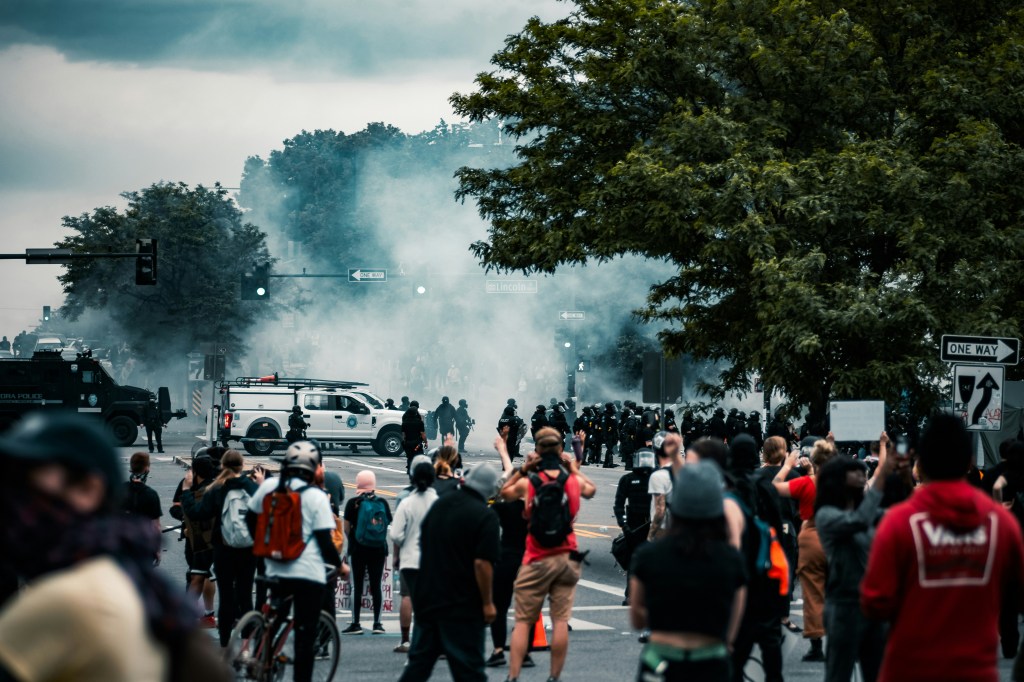
I don’t know if we’ve truly processed any of this. Who has the time?
There are wars and genocides actively taking place around the globe while we debate the meaning of the word “genocide.” Pandemics and natural catastrophes ravage whole countries, and there are people who still believe the Earth is flat. A bitter, selfish excuse for a TV star has practically declared himself dictator, and a third of the United States seems to think it’s a good thing that nazis and authoritarianism are suddenly back in style. We’re watching freedoms crumble around us and still have to clock into work every day if we want to pay those pesky bills.
To top it all off—to dream of a better way of life, to be kind, to value truth—these have somehow become radical notions.
None of us is okay. Not really. We’ve got this collective trauma hanging over all our heads, saturating our souls, and we rarely talk about it. How many of us have simply referenced “the before times”? How many of us struggle to accurately mark the passing of weeks and months. Time is out of joint. We’re destabilized. All that before we even factor in whatever personal struggles you or I have faced this past decade.
We wake every day waiting for the next terrible headline. We watch ineffectual leaders bicker and achieve nothing but harm. We’ve lost shared reality and common ground with our friends, our neighbors, our loved ones. This is the world each of us is trying to build a happy life in. This is the world young people find themselves inheriting. It’s no wonder we all feel adrift.
We live in a divorced reality that is shaped by ideology, by politics, by whoever holds the microphone and screams the loudest. Words lose their meaning. Common values become partisan markers. History shifts. News and financial interests and corporations and politics and religion intertwine into deformed and bastardized versions of themselves. Young men fall down the red pill pipeline. Conspiracy theories run rampant. Even rational people find themselves less certain than they once were. Ideas that once felt outlandish slowly become possible in the face of so much absurdity. It’s hard to know who and what to trust.
I was raised in the church and still hold deep value for faith, but let me tell you, it has been a jarring time to navigate religious spaces. People I cherish have called me a hypocrite, have accused me of walking away from belief, have said that I cannot vote and live the way I do while also being an honest practitioner of Christianity. The shared values that once bound us together have deteriorated. Plenty of people have similar stories. Other divisions may not stem from religion, but some related offshoot of the creeping extremism that has permeated and rotted society around us. Religious or not, academic or not—if you’ve found some fundamental part of your existence shaken unexpectedly and been left to navigate the chaos of that aftermath, then I suspect you too know something of what I’m talking about.
So many of these issues, prejudices, inequalities were always there, but my oh my, have they gotten bold of late, fed by fears that have no bearing in truth.
There’s a host of reasons that this happens, but a big part of it is cultivated Content. What’s the psychology at play across this convoluted social spectrum? All too often, it’s soundbites. It’s simple ideas presented in a compelling manner. It’s headlines and the quick ability to group things into “good” or “bad.” It’s someone who tells us what to think so that we don’t have to wrestle through the question ourselves. It’s a convenient little answer that helps make sense of all the uncertainty lurking outside the window. It’s a screen constantly powered on in order to block out the fear and doubt crouched in the back of our minds. It’s media carefully tailored to keep us distracted in the most profitable way possible. It’s mindless banalities or artificial rage which allow us to feel moral and superior without needing to get up from the couch. It’s the fact that so much around us is breaking, and it is so totally beyond the capability of any one individual to fix it.
Living honestly and earnestly in this world is hard. Soundbites, content—those are simple.
This isn’t just an attack on whatever group of people I happen to disagree with. There are definitely some groups out there right now who are particularly at fault (nazis high among them), but even in the communities where I happily exist, people are tired. We want to assign value to things quickly, fit our understanding of the world into terms we can understand, frame the events around us in a way just makes sense. And why wouldn’t we? We’re running on fumes. We burned our reserves years ago, and yet here we are, still trying to survive.
In just the past decade, the world we know has been fundamentally remade. Socially, financially, politically, economically, environmentally, religiously, artistically, technologically… add whatever other “ly” descriptors I’ve missed. The future feels wildly uncertain, the present seems dangerous, the past is a fuzzy memory—and so much of the shared fabric of our society is fraying at the seams.
We’re trapped in this unreality, and I think it’s a huge part of why the struggle feels this difficult. Truth and words and history and science are under attack for political gains. Relationships we once trusted in are changed or gone. The security we felt in how we understood the world, for better and worse, is no longer as certain as it once was.
Layered over all that, we have unending waves of AI generated material, unflinching algorithms, shocking headlines, soulless media, and influencers whose survival demands the unending production of literally anything rather than allowing stillness to creep in.
It’s all Content.

Now, I could rage against Capitalism, against corporate interests, against profit margins, against political ideologies and power structures, against the status quo, loss of empathy, and an abundance of other things which have led us to this moment.
I could complain about the death of media literacy and nuance, the devaluing of the humanities, the pursuit of “progress” for progress’s sake. But let’s be honest, I’ve talked long enough. Besides, there are plenty of other people who have addressed those topics better than I could do here.
So what’s all this then, just a depressing series of observations? Is Josh just Old Man Yelling at Cloud? Is all this just Content too?
I hope not.
First, for me, these are thoughts that have been circling my head for a while. We’re not okay. I think many of us recognize this in brief asides between trusted companions as we go about our day.
“How have you been?”
“Oh, all things considered, pretty good.” This is typically accompanied by a vague gesture at the wide, terrible everything which surrounds us as the other person nods in shared understanding. Both people then go on with their days as normal.
So I want to put it into words. To recognize it. We have lost a great deal—not just in physical reality—but in hopes and dreams, in time and memories, even in words and the solid mental ground on which we once stood. It’s okay to mourn these things.
I think it’s good to acknowledge just how disorienting life has become. We never really left survival mode. We just pulled the barricades down from the doors and went back to work because we had to. It takes energy to keep wearing a smile while the world feels like a gaping wound that won’t quite heal.
So, if you feel the same, this is for you. I see you. You’re not imaging it. This is not the way things are supposed to be.
Unfortunately, there aren’t easy solutions. I do have great hopes that, collectively, we will come through to the other side of this. We will weather this storm, overcome evil, and work together to create a future better than this time we’re presently experiencing. But like I said earlier, no single one of us can make that happen. It’s a collective effort, and it’s going to take time. That’s also a separate essay.
So, what do we do today?
I think the point right now is to simply be real. The world doesn’t need more Content. People don’t need more artificially constructed versions of reality designed only for engagement, monetization, and algorithms.
Humans crave what’s real. We always have. Real connection, real perspective, real art. Just look at the most beloved creative works past and contemporary. The ones people engage with the most are the ones that say something important or tackle hard questions. Even art designed for escapism (also valid by the way) needs substance to hold us there. Otherwise we’d just scroll to the next option without a thought. Whatever the form or genre of the thing, people connect with vision, with passion, with heart. We don’t want to be pandered to; we want to be inspired. We, collectively, have to remember what it’s like to engage with complexity again. We have to rediscover discomfort. We have to be willing to spend time and effort wrestling through difficult things. The artificial is all perfect brushstrokes and clean lines and glossy perfection. Reality is a mess, but it’s reality that gives us value.
So go be honest with your loved ones. Share a deep conversation. Let them catch a glimpse into your soul and find connection there. Remind them how much they truly mean to you.
Create something meaningful. It doesn’t have to be fancy. You don’t even have to share it. Knit for the first time. Sing badly. Write the wrong words in the wrong order. Leave teardrops on your notepad or laugh at jokes only you will understand. Don’t chase trends. Don’t do it for other people. Do it because it brings you joy.
The bills and the work we do to pay them aren’t going anywhere anytime soon, but don’t let them have the final word in your day either.
If you’re an influencer, keep doing that. I just hope you’ll stay curious. Let your audience see something real.
Maybe it starts by just being honest with ourselves. What if we turn off the noise and allow ourselves to feel the feelings we’ve been avoiding. Mourn what we’ve lost. Wrestle with the discomfort. Find our way through it to something better. And please never feel that you have to walk it alone. I hope you have a living, breathing human to share those burdens with, when you’re ready.
As for the artists. I see you. We have to keep trying. There’s no right way to do it. There’s no singular measure of success. But we have to keep going all the same. Even at the worst times in our history, humans have managed to create remarkable things. The dreamers are not going anywhere. I say this first and foremost as a reminder to myself. For years now, I’ve wished I could be more creative again, to consistently rediscover that spark that once felt so familiar. It hasn’t happened yet. I keep sitting down at the page anyway. Sometimes I write the thing I intend to, or a piece of it. Sometimes instead, I write an excessively long essay about why I’m not writing the book my readers are waiting for.
There’s too many other forces trying to reshape this world into something bleak and soulless and terrible for us to give up on the feral little creative voices running rampant in our hearts and souls. We’re the ones that spray color on the walls under cover of night. Even if we don’t find widespread recognition, even if it doesn’t put money in our pockets, people still need what we have.
When we humans encounter something that is real, that is honest, that is vulnerable—it lingers. Your flawed, messy, contradictory, uncertain, passionate, deeply subjective view of the world is exactly the thing that sets you apart from anyone else. It’s why your art matters. The algorithm wants to fit everything into tiny, marketable boxes. Smash those boxes. Take risks. Get weird with it if you need to—like really weird. Make your family wonder what’s going on inside your head and make readers curse your name even as they anticipate picking up your next book
Or photograph
Or song
Or whatever it is that you want to create.
Real doesn’t need to mean factual. It just means honest. From your heart. Whether that be dragons or monsters or first kisses or angsty teenagers trying to carve out a place in the world—I urge you to raise your voice against the deluge of artificial Content that threatens to bury us, to recognize the artifice for what it is and seek the truth behind it, to instead anchor human experience in things that are terrible and beautiful and messy and uncomfortable and inexplicable and as absolutely weird as you want to make them.
Surrounded by unreality, let’s remember the value in simply being real.
I truly believe that’s how we find our way through this disorienting fog, and back into the bright light of day.
 Josh Gauthier